

I am a Christian; I believe that the Bible is true and the Christian tradition is worthy of being followed. Being a Christian does not mean that I buy into the belief that we are supposed to believe everything preached without doing any of our own research. This is not a biblical teaching. If you read the Bible, you will see that it never encourages blind faith. Rather, it encourages a faith grounded in history and facts. Though there are still mysteries to be uncovered, they do not take away from the validity of the text, as uncertainty exists in all areas of study. So whenever I say that I fully believe that Jesus Christ is the Son of God, trust that I have done the research to support this claim. And before you say “the Bible doesn’t count,” its translation accuracy and the number of historical documents that back up its claims disprove this claim. However, for the sake of the sceptics, this article will focus on secular sources that cannot refute the claim that Jesus Christ is the Son of God. And before I dive in, I have to admit to you that finding evidence for this topic was extremely hard. There was just way too much! However, since this is just an article, and not a comprehensive research paper, please forgive me if I only scratch the surface of the extensive evidence and research that corroborate my points. With that being said, let’s get started with the million-dollar question: Was Jesus Christ just a good teacher?
Was Jesus Christ just a good teacher?
It is a universally accepted fact that Jesus Christ lived. If you open Google and just type in “was Jesus Christ a good teacher?”, the search engine will bring up sources that all agree that this man lived, taught, and was seen as good. Remember that word for later.
Now, a history lesson on the art of ancient Roman punishments is required to have a full understanding of the remainder of this section. Crucifixion was the worst type of punishment available to enemies of the Roman Empire. It was so bad that Roman citizens were not allowed to be subjected to it.
Matthew Maslen wrote an article titled Medical Theories on the Cause of Death in Crucifixion, and in it, he talks about what the victims would have to go through before and during this mode of execution. He describes the whipping that would occur beforehand, during which many victims died before they made it to the cross. Maslen then describes the different ways of being crucified, citing the gruesome details of nails through the feet and hands, and seats to sit on to prolong the deaths of the victims.
This mode of execution was the most humiliating way to die. It was reserved for the worst of criminals, people who Rome wanted to make suffer as much as possible. John Granger Cook cites Jean-Jaques Aubert in his article, Crucifixion as a spectacle in Rome, saying, “Because of the absence of blood shed out of an open and lethal wound, which evoked the glorious fate of warriors, this type of death was considered unclean, shameful, unmanly, and unworthy of a freeman.”
Hopefully, this gives you a little bit better idea of what death we claim that our Lord suffered. Now, we have to go back to the word good. No good teacher is going to find himself on a cross. This was reserved for revolutionaries, blasphemers, people who threatened the order of the known world and Rome’s place in it, all of which Jesus was condemned for. So, how can we acknowledge that he was a good teacher?
We can’t. It’s just not possible to acknowledge both the fact that he died the “extreme penalty” and was also a good teacher. C.S. Lewis, an atheist-turned-theologian, said it best: “A man who was merely a man and said the sort of things Jesus said would not make Him a great moral teacher. He would either be a lunatic…or else he would be a Devil from Hell. You can shut him up as a fool, you can spit at him and kill him as a demon, or you can fall at his feet and call him Lord, your God.” Well, the world certainly does not call Him a fool; no one calls him a demon, so…who is He?
What About the Resurrection?
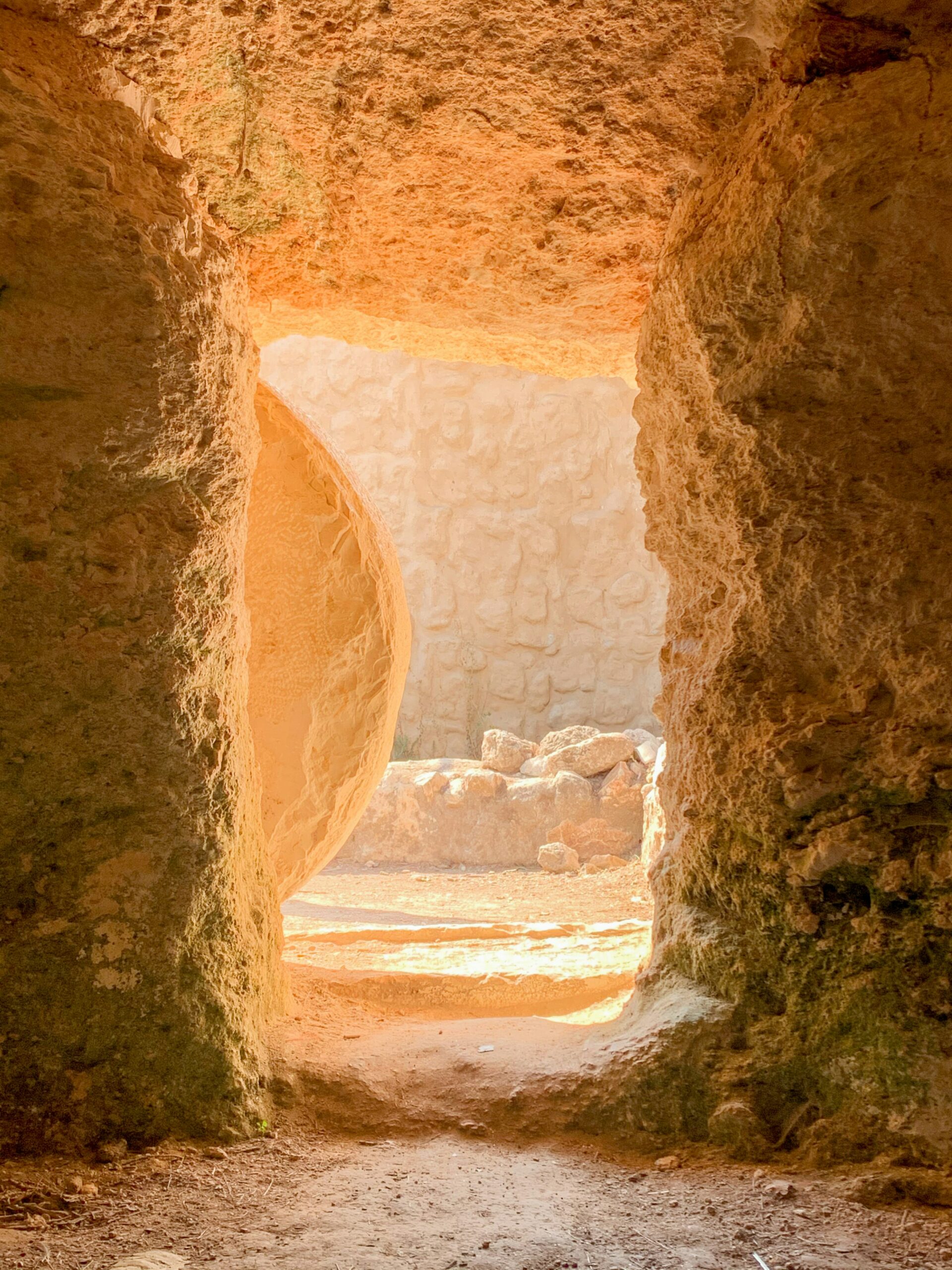
“Ok, sure, maybe Jesus’ reputation and his cause of death contradict each other, but what about the resurrection? There is no way that he really came back to life.” This is a valid question. While the resurrection is the foundation of the Christian faith, it can be the toughest one to reconcile with a secular worldview. Yet even this phenomenon has evidence to back it up, stemming from the fact that no one has been able to disprove it. Atheist debaters are actually told not to debate the resurrection because they will not win. If you think about it, this is a little crazy because it should be super easy to prove that a man didn’t actually rise from the dead. Yet no one has been able to for 2,000 years? Weird.
But for the sake of a good debate, let’s challenge this claim, using the investigative book The Case for Christ, by journalist Lee Strobel.
Did Jesus Actually Come Back to Life?
We can begin with the earliest creed of Christianity, which historians date to being written around A.D. 32-38, one to five years after Jesus died. This dating renders the claim that the resurrection is a mere legend as implausible due to its nearness to the actual event. Since we will continue to come back to this creed, I am going to go ahead and quote it from 1 Corinthians 15:3-8: For what I received I passed on to you as of first importance: that Christ died for our sins according to the Scriptures, that he was buried, that he was raised on the third day according to the Scriptures, and that he appeared to Cephas, and then to the Twelve. After that, he appeared to more than five hundred of the brothers and sisters at the same time, most of whom are still living, though some have fallen asleep. Then he appeared to James, then to all the apostles, and last of all he appeared to me also, as to one abnormally born.” The creed, written by the apostle Paul, Pharisee-turned-Christian martyr (a historically backed story of a remarkable conversion), starts with the belief in the resurrection, therefore affirming the empty tomb. And remember, it is too old to be legendary.
There is also evidence outside of the creed: the core story, as well as who the first eyewitnesses were. While I do readily agree that there are differences in the telling of the resurrection story, Dr. William Craig, a known debater for Christianity, an apologist, and a professor, points out that all the contradictions are in the secondary details: the core remains the same in every single account. He also cites Michael Grant, a historian who taught at Cambridge, who said that we must allow the same lenience we show to other historical accounts to hold the same value in the Bible. We believe that Hannibal actually did mount a campaign and was a true military leader, yet we only have two very contradictory accounts of this happening. Why do we believe it then? Because the core is the same! We cannot let the content of the historical evidence determine if we believe what it has to say.
Another point to look at is the eyewitnesses. The Bible says that it was a large group of women who were the first to be witnesses to the empty tomb. Why does this matter? Because in ancient culture, especially Jewish culture, women were at the bottom of the totem pole. It was actually better to be a slave than a woman, and their eyewitnesses meant nothing to the Jews. Yet all the gospels cite them as the first eyewitnesses. If they were making this story up, then they would logically have chosen more influential people to be the first eyewitnesses in the story to add validity. Yet this is not what the gospels record. Why? Because they were more concerned with telling the truth than making it sound good.
Speaking of eyewitnesses, the creed mentioned above cites large numbers of people who Paul claims saw Jesus, spoke to him, and heard him speak. By naming three people specifically and alluding to another 512, he puts it into the hands of the people who would have heard the creed to follow up with these people and hear for themselves. If these people were made up by Paul, he would have been a lot less specific in it. But he was confident in the testimony of these people, and therefore, they can be trusted as evidence of the risen Jesus. After doing the math, Lee Strobel, who was an atheist at the time, did the math and figured that if each witness testified for only 15 minutes, then it would take 129 hours to get through all of them. This led Strobel to the conclusion, “All of the gospel and Acts evidence- incident after incident, witness after witness, detail after detail, corroboration on top of corroboration, was extremely impressive. Although I tried, I couldn’t think of any more thoroughly attested event in ancient history.”
The core story, early Christian creed, multiple eyewitnesses, other historical accounts that we take as fact and not legend, and the sheer depth of evidence for the resurrection make it difficult from a historical point of view to doubt that God raised Jesus Christ from the dead. Craig backs up this point with a quote from theologian Carl Braaten: “Even the most skeptical historians agree that for primitive Christianity…the resurrection of Jesus from the dead was a real event in history, the very foundation for faith, and not a mythical idea arising out of the creative imagination of believers.” Granted, it is completely wrong to assume that Jesus raised himself naturally: that is just not possible. But based on the evidence and other theories that have so many holes, the theory that God raised Jesus from the dead is actually the most probable solution. Craig hits this point home, saying, “As long as the existence of God is even possible, it’s possible that He acted in history and raised Jesus from the dead.”
The Evidence from Christianity
The Bible does not describe the disciples as always being faithful people who never wrestled with doubt about who they were serving. Even after three years of being around Jesus, hearing his sermons, and listening to his prophecies concerning his life, death, and resurrection, they were the first to abandon him when Roman soldiers came and arrested him. The gospels describe them hiding in a room all together, terrified to even go outside, for fear that the same thing would happen to them. 70 years later, 11 out of the 12 disciples had been killed in the most gruesome ways. Was this because of their following Jesus for three years? No! It was because of their adamant belief that Jesus Christ is the Son of God and that he lived, died, and rose again.
A change this drastic must be a result of a profound change of heart, which can only be explained by their unwavering belief that Jesus Christ is the Son of God.
How does this make them different from other religions? Well, as was proven earlier, the disciples were actually there. They walked with Jesus, saw him die, and, according to them, saw him risen again. J.P. Moreland, American philosopher and theologian, explains, saying, “the apostles were willing to die for something they had seen with their own eyes, and touched with their own hands. They were in a unique position not to just believe that Jesus rose from the dead, but to know for sure…people will die for their religious beliefs if they sincerely believe they are true, but people won’t die for their religious beliefs if they know that their beliefs are false.”
The disciples died horrible deaths for Jesus. And their deaths were not in vain. Because of their boldness, millions of people around the world profess that Jesus is Lord, and, following their example, are willing to die rather than revoke these claims. That is a legacy worth looking into.
Is Jesus Christ Actually the Son of God?
The facts have been stated, and now it is time to evaluate them, following Strobel’s technique. I will tie each point back to why it corroborates Jesus’s claim that he was the Son of God.
The crucifixion was not only the most horrific, humiliating, and excruciating form of execution, but it was also predicted that the Messiah, the Son of God, would experience it. In Isaiah, which was written 700 years before Jesus lived, a prophecy was penned in Isaiah 53:5, describing the suffering that the Messiah would have to go through: “But he was punished for our transgressions, he was crushed for our iniquities; the punishment that brought us peace was on him.” Psalm 22 describes the piercing of feet and hands, and Zechariah 12:10 describes the Messiah saying, “him who they have pierced.” All of these were fulfilled by Jesus, who also fulfilled 300 other prophecies in the Old Testament. The probability of this is so extreme that no number describes it, yet Jesus did it. This is something that only the one who these prophecies spoke of could have possibly done, which means that Jesus Christ must be the Messiah, the Son of God.
We already concluded that if we accept that the crucifixion is true (which it has been), then we cannot possibly say that Jesus Christ was just a good teacher. Yet religions, as well as atheists, historians, and scholars, all say that he was and even hold him in the esteem of a prophet. Yet this is the same man who got labeled a blasphemer and a revolutionary by the greatest empire at the time. Seeing Jesus as just a great teacher is not doing him justice, whether as a lunatic who fooled everyone, a demon sent by the evil one, or the Son of God, sent by his Father to save the world.
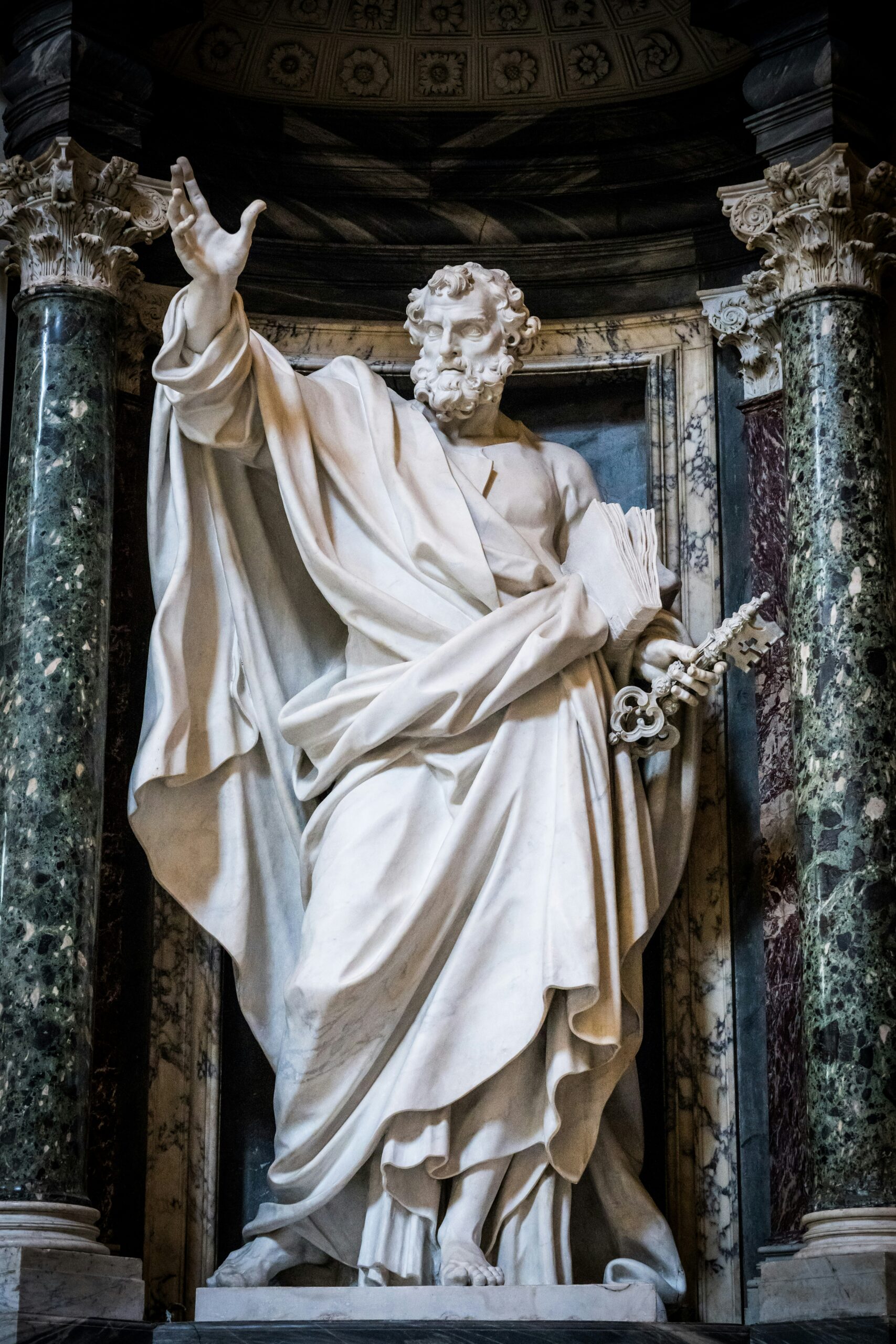
The validity and historical evidence of the resurrection make the issue a philosophical one, not a historical one. The evidence is clear; now all that is left is to challenge your belief in whether or not there is a God. The Pew Research Center found that the world median of believing that there is a God is 83%. So, if the belief is there, then it is not difficult to believe that the One who made humans, the earth, and all its inhabitants, could also raise a man from the dead. It begins to sound more reasonable. But why Jesus? Well, we have to turn to the Bible for this. Peter says in his sermon at Pentecost these words in Acts 2:24: “But God raised him from the dead, freeing him from the agony of death, because it was impossible for death to keep its hold on him.” Death literally could not hold him, as proclaimed by a man who denied knowing Jesus only a couple of months before. Peter now believed in Him so fervently that he was willing to risk ostracization, arrest, and death to preach the message of his resurrection. The only plausible explanation for these words was that he saw Jesus risen from the dead and that he believed that he was the Son of God. If Peter believed it in 33 A.D., then what is stopping us?
Finally, the evidence of the rise of Christianity cannot be disputed. According to the British Broadcasting Corporation, it spread across the Roman Empire, gaining 35 million followers in around 320 years. Much of this spread occurred during the reign of Emperor Nero, who was famous for the persecution and slaughter of Christians. Christian leaders were getting killed left and right, people were being dragged into prison for their faith, and if they didn’t recant, they died. This poses the question: if Christianity is false and just a ploy for recognition, why would so many early followers be willing to die for it? So many died and still do for their beliefs around the world, yet when posed with a way out of persecution, time and time again, Christians will choose death over recanting.
This could only happen if the people truly believed in what they were talking about. How can we ignore the one in seven Christians around the world who are persecuted and are willing to die for their faith? It is at least worth taking a look at and seeing the cause for their sacrifice. And what is the cause? A whole-hearted belief in the fact that Jesus Christ is the Son of God, who became human, lived a perfect life, and died a sinner’s death so that we wouldn’t have to. He then rose, defeating sin and death forever, and now sits at the right hand of the throne of God, advocating for us to this day.
Conclusion
At the end of the day, the belief that Jesus Christ is the Son of God is a decision that one must make on their own. Yet I will leave you with this: Christianity is not built upon a blind faith or a teacher who is now dead. It is a faith grounded in history and facts, both religious and secular, that has built it as the most backed-up religion and movement in history. This is not something that can happen based on good teachings alone. There is something else here, and this something is that Jesus Christ is truly the Son of God.
