
By Sayed Mohamed
Brian Shipman stood just outside the classroom door, greeting each student with a handshake and a joke on the first day of the semester. For many students at Drury University, it was their first real glimpse into the world of videography—and their first encounter with a professor who would change the way they saw storytelling.
Over the next few years, Isabel would take multiple classes with Shipman, learning everything from Final Cut Pro to drone videography. But what stuck with her most wasn’t just the editing tricks or awards—it was the way Shipman taught students to tell real stories, the kind no algorithm could replicate.
“I remember he stopped me just to make sure I shook his hand,” said Isabel Woidela, now a junior in Multimedia Production and Journalism. “That first impression stuck. He made class feel personal.”
For Shipman, who started his video career in 1984 and began teaching at Drury in the early 2000s, the human touch is something AI simply can’t fake. While tools like AI-enhanced editing software are speeding up post-production, he’s firm about where the line is drawn.
“They can give you a lot of visuals, but what they can’t do is be personal,” he said. “If you’re trying to tell a story with real human emotion, especially from a journalism standpoint, AI can’t do that. And I don’t know if it ever will.”
In his classes, Shipman sets high expectations—not just to master the software, but to deliver stories that matter. Students aren’t just editing for a grade—they’re crafting content with purpose.
“He’ll definitely push you,” Woidela recalled. “If he sees something that he doesn’t think is your best potential, he’ll call you out on it. And honestly, me and everyone I’ve talked to is grateful for that.”
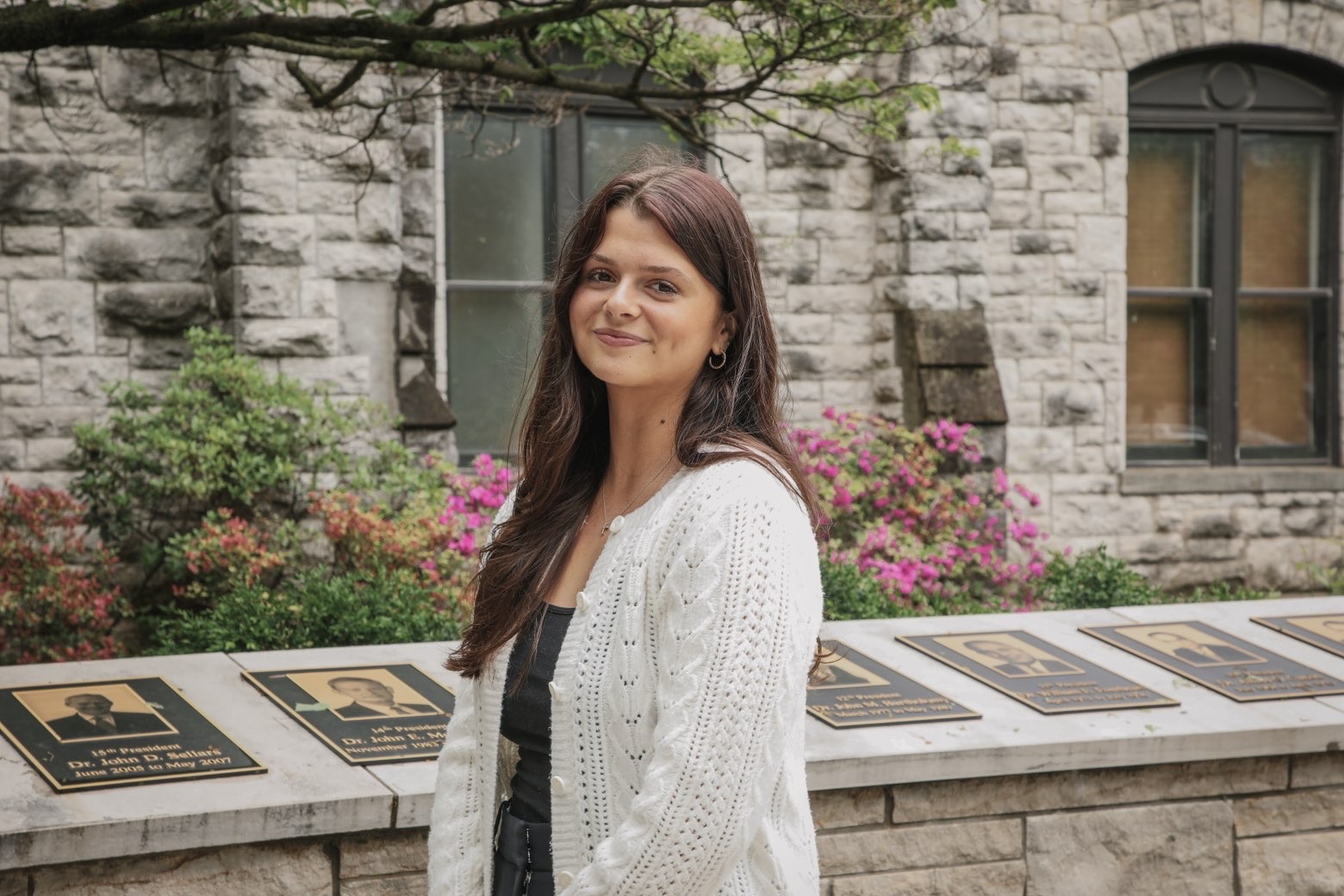
Shipman’s teaching is rooted in real-world preparation. Woidela shared how one of her projects under his mentorship went on to win second place in a national competition. “He’s always going out of his way to set us up for opportunities we didn’t even know existed,” she said.
Although he hasn’t personally integrated AI tools into his workflow, Shipman remains curious. During the interview, he was shown an AI-based feature that can automatically detect and track people in videos—a major time-saver in editing—and quickly became intrigued by its potential.
“This isn’t AI,” he said after seeing the feature in action. “This is software. Not what I understand AI to be.”
Even so, he sees the growing usefulness of AI—especially in animation and post-production.
“That software is very complicated to learn and AI is making it easier,” he noted. “There is great possibility for the future of AI in animation and post-production.”
Professor Jonathan Groves, a colleague in the Communication Department, echoed some of these thoughts from a broader perspective. While not speaking specifically about Shipman’s teaching, Groves emphasized the power and risks that come with AI’s expansion into video.
“AI has already made things worse in some ways,” he said, referring to fake press conferences and deepfake videos circulating online. “It’s starting to blur the line between truth and fabrication.”
Still, Groves sees value when AI is used ethically—as a time-saving tool rather than a replacement for creativity.
“I like to think of AI as ‘assistive intelligence’ instead of artificial intelligence. It should extend our abilities, not replace them.”
He also warned that because AI is trained on biased datasets, it can unknowingly replicate cultural blind spots or stereotypes—something human storytellers must be equipped to navigate.
“AI is derivative. It doesn’t think—it generates based on what it’s been trained on. That’s why we still need storytellers who can think, feel, and create something new.”
For students like Isabel, that’s exactly what Shipman teaches.
“He taught us the value of satisfying the client,” she said. “It’s not a copy-paste model. Each client wants something different, and that takes a human eye.”
Shipman’s philosophy goes beyond just teaching video skills—he teaches students how to think like professionals. His classrooms are more than lecture spaces; they’re training grounds for the next generation of creators.
As AI continues to evolve, it’s clear that the tools may change—but the role of the human storyteller, especially those trained by professors like Shipman, remains vital.
“We want to be pushed. We want to learn. And he’s the kind of professor that makes sure we do.”
In a time when machines are rewriting scripts, generating voices, and spitting out entire videos, it may be comforting to know that storytelling, at its core, is still very much a human art.
